Why poetry?
Why now?


Thoughts and musings
I have been thinking about poetry. Often. This is nothing new, the power of poetry to inspire and to provide access to all when writing creatively has resonated with me since I myself was at school. The prominence of thought of late has come as a result of a few experiences I have recently had:
Attending a Pobble writing moderation webinar with guests Dandelion Learning, where poetry was explored as an empowering medium which creates space for pupils to ‘Write with creativity’ allowing their teachers to ‘assess with clarity’. Challenging the misconception that a poem may not be a valuable piece to put forward to showcase a child’s writing skills.
Listening to panellists at The English Association Conference discuss how the art of poetry allows writers the opportunity to express their ideas, thoughts and feelings in a variety of forms and structures. This was particularly interesting to consider when viewed through the lens of climate education and sustainability (more on this later).
Using Kate Wakeling’s poems (namely ‘Grandma and the Sea’ in her incredible collection Cloud Soup) with a class just last week, where the engagement, responses and subsequent writing outcomes (chosen independently by the class - not as part of the lesson) were just incredible.
I have shared a previous ‘glimmer’ exploring why poetry may be overlooked and potentially side-lined within the curriculum, particularly in primary settings.1 Teacher confidence and perhaps personal experiences of reading or writing poems may discourage poetry from being explored overtly, instead showing up in one week units towards the end of a term to ‘tick the genre coverage off’.
In today’s glimmer, I would like to continue to make a case for the power of poetry, particularly when considering our collective hopes of making reading and writing accessible, ambitious and available to each and every young person.
Ideas and practical suggestions
So, if you would like to give poetry more prominence in your curriculum, what might be helpful to consider? Below are two suggestions which I hope can be actioned with minimal time spent preparing. Think of these as more of an intentional opportunity to evaluate how poetry shows up in your pupils’ learning experiences, alongside where there may be room for more investment and development.
At The English Association Conference we were gifted with the opportunity to hear from a range of professionals and literary enthusiasts from all corners! One of the comments which landed so powerfully with me from the day could easily have been missed. Dr Jo Clement, poet and Assistant Professor of Creative Writing, specialising in poetry at Northumbria University, has recently started visiting schools to share her poems and expertise. She reflected on this experience during the panel discussion and shared that she was, ‘interested in finding out what the children want from me’.
This of course got me thinking.. How often might teachers and leaders (myself included) organise brilliant experiences for their pupils to celebrate the power of writing, perhaps through poet or author visits or creating themed days full of activities, yet miss what the children are actually looking for from this experience? Of course, celebrations and special visits will be organised with the best intentions, yet if the planning is driven by the event itself, might we be missing such a seemingly obvious part of the puzzle. The children’s wants and curiosities?
And this is where poetry, once again, become so powerful. It is open to interpretation. It comes with an invitation to make it your own. Carries within itself a spark of motivation to be taken further.
1. Nuance of language.
The theme of last year’s National Poetry Day2 was “play” (this year’s is “wonder” if you would like to get ahead with your thinking and planning!). I marvelled and celebrated this concept linked to poetry in my recent glimmer, ‘Words, words, words’3 There is a power in the study of vocabulary and language which poetry affords the reader. This is particularly effective when pupils understand that they can select the words and phrases which most matter to them. Which communicate their meaning in the way that they intended.
So, how can a focus on vocabulary and word choice empower pupils in their exploration of poetry?
As promised, this is where I would like to return to the session at The EA Conference which really did get me thinking. The discussion around the possibilities which are available to use words to describe the planet. Are the language choices made hopeful or anxiety-inducing? Are we talking about ‘global warming’ or ‘global heating’? Are plants known by their scientific names? Is there an opportunity for ‘radical hope’ in how children are educated about climate and education - especially through the opportunities which English affords? As part of this session, we were directed to the incredible work of UCL, signposted by Helen Jones (Lecturer in Primary Education). You can find FREE lesson planning and CPD resources to support with ‘Teaching for Sustainable Futures’ here.
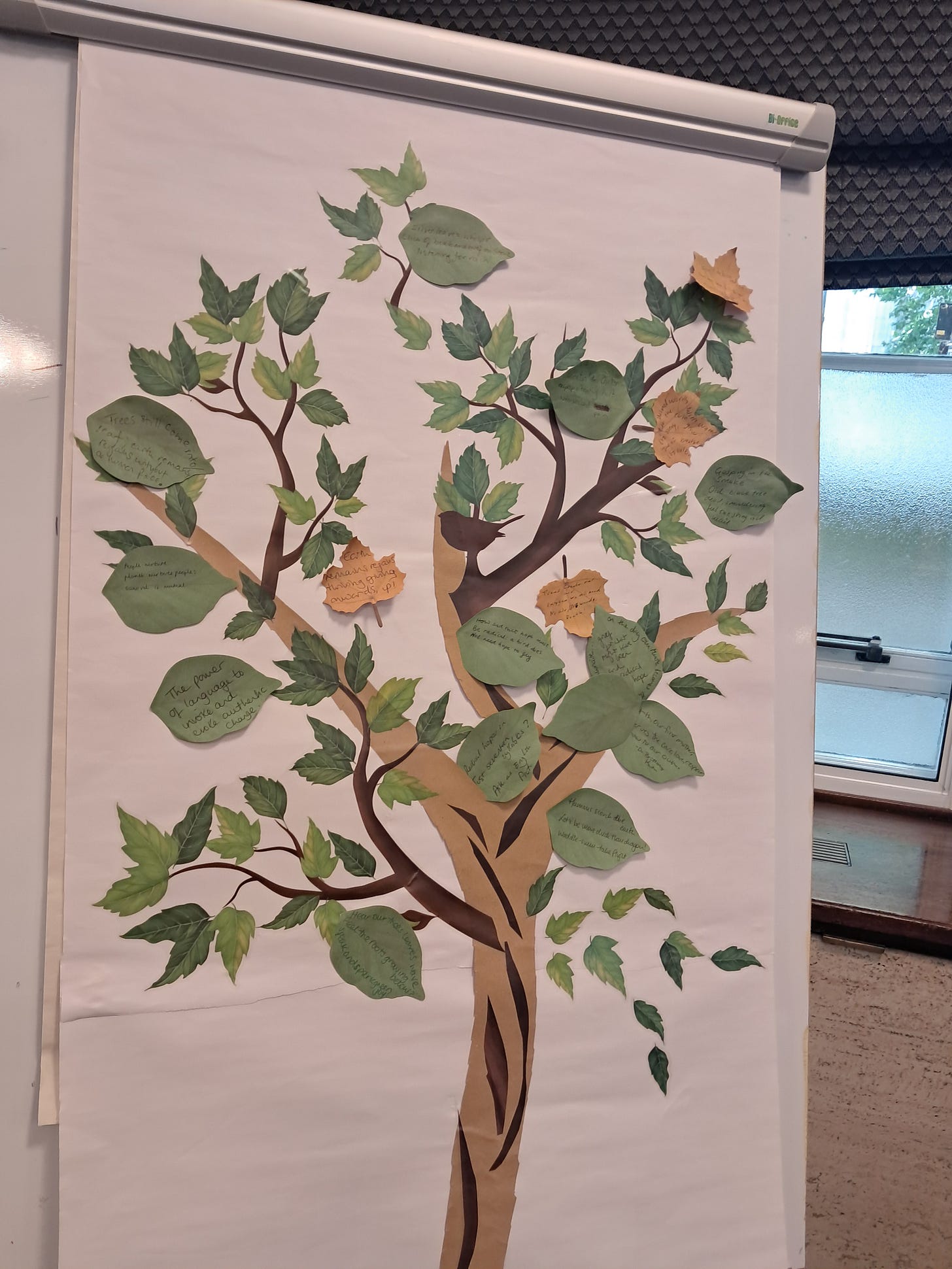
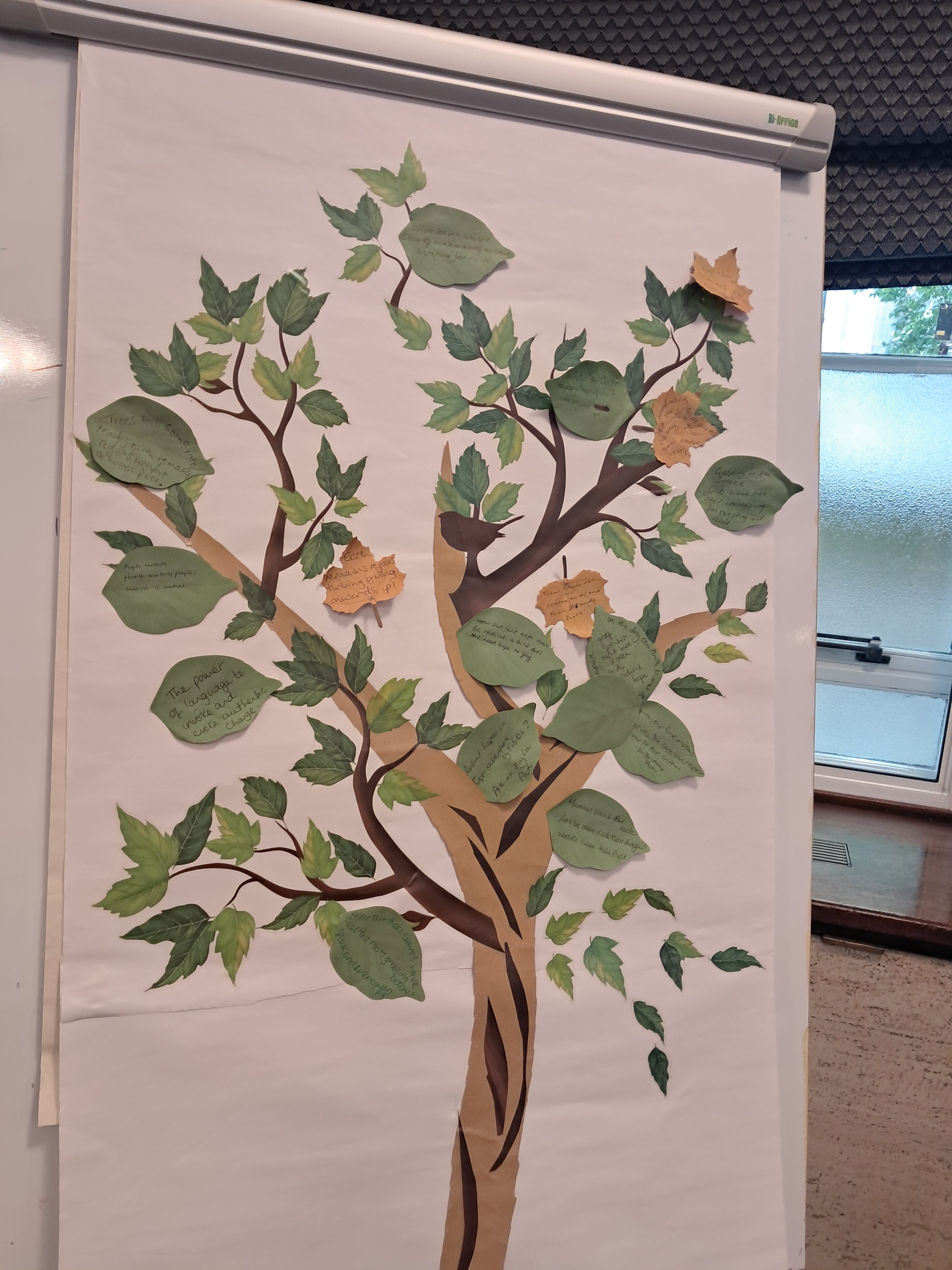
In addition to our exploration Lorna Smith (Associate Professor in Education, PGCE English Subject Coordinator at the University of Bristol) invited attendees to write our own haikus or other poetic expressions based on the session (picture shared below - look at those incredible sticky notes!) This got me thinking - are there opportunities for us to invite our pupils to respond to learning experiences using a poetic form? In doing so, what might we uncover or create a channel for?
My final two ideas and practical suggestions are linked to agency. Poetry can create a real sense of agency. In both spoken and written forms. Inviting pupils to read poems aloud, to themselves, to a partner or if they would like, in front of a class or larger audience, can be incredibly powerful. Acknowledging and celebrating that how a poem is chosen to be read is unique and personal to the reader. Experimenting with the effects of the punctuation or the poetic devices which have been deployed. This is a joy and an important opportunity. It is valuable and doesn’t necessarily need to be observed, captured or assessed.
My second idea and suggestion which demonstrates that poetry can increase agency is around motivation. Like the teachers who I mentioned at the start of this piece, negative experiences of poetry can plague the pupils as much as the adults. The perception of, “I don’t like poetry,” said with a closed mindset. Yet, when children allow themselves to lean in, to experience the poetry. To not be heading straight for the analytical and critical, something special can happen. A connection which can create an outlet. Those moments when pupils are motivated and inspired to write their own poems truly are special.
2. A plethora of poetry
Another caveat to my the subtitle of my glimmer today - why now? Well, for many, schools are entering into those final weeks before the long summer break. If you are reading this glimmer having already reached the finish line, you may be considering ways to welcome your new cohort of children when you return (after a lovely long holiday of course!) I would highly recommend taking a look at the resources below as you are making these plans. The benefits of exploring poetry with your pupils really are innumerable.
So, how might you look to embed poetry in lessons (across the curriculum) and daily experiences? What could be actioned to ensure that contributions from the children are welcomed?
Poet visits. One of the most powerful ways in which you can bring poetry to your pupils is by arranging for them to meet real-life, published poets. These experiences are not only beneficial for you pupils, but also for your staff. If you have perhaps identified a lack of confidence or engagement with poetry from your staff, learning from a poet is an incredible CPD opportunity. I write a lot about ‘glimmers’ being rooted in authenticity. Opportunities created as a result of an author visit truly are just that.
I would love to hear of further poet suggestions in the comments. My short but mighty offering today includes:
Awards. Another way to increase pupil engagement whilst investing in teacher knowledge and enthusiasm is to follow annual poetry awards. Many also offer shadowing experiences. Do take a look at the opportunities below - full of resources and ideas to get you started:
Signposting resources. It is completely understandable to consider that the breadth of poems available to explore and uncover is so vast that selecting collections can be daunting. Only last week did I teach ‘The Magic Box’ by Kit Wright (a really fantastic poem but arguably a fail-safe and a go-to in schools) for what felt like the twentieth time. In the spirit of the uncovering of glimmers, I hope this list of resources to support with uncovering poetry is helpful: